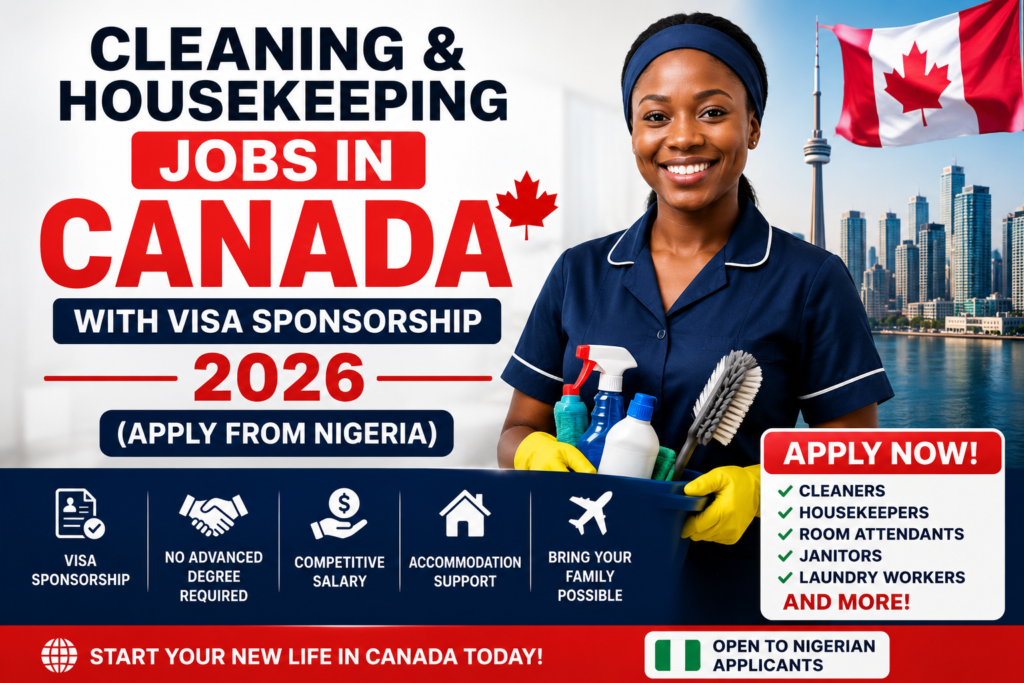

A hotel housekeeper in Canada earns CAD $22 an hour — and a full-time year of that work pays around CAD $45,000, about ₦50 million — with free staff accommodation, subsidised meals, and a genuine path to permanent residency. No university degree. Often no experience required (employers will train you). And you can apply for it directly from Nigeria, with the Canadian employer paying for your visa sponsorship. For a hardworking Nigerian, cleaning and housekeeping is one of the most accessible, lowest-barrier routes into Canada that exists in 2026.
But here’s the honest catch most “apply now!” adverts hide: cleaning roles fall under Canada’s low-wage LMIA category, which has high refusal rates when applied for the wrong way. The Nigerians who actually get approved use a specific strategy — targeting the right wage level, location, and employer. This guide gives you the figures in dollars and naira, the real requirements, the approval strategy that works, and the exact step-by-step path to a sponsored Canadian cleaning job from Nigeria. Let’s get you hired and approved.
What Cleaning & Housekeeping Jobs Pay In Canada (In Naira)
Let’s start with the money, because it’s transformative in naira terms even for entry-level work. Cleaning wages in Canada have risen significantly due to labour shortages — here’s the 2026 picture:
| Role | Hourly (CAD) | Annual Full-Time (CAD) | Naira (≈) |
|---|---|---|---|
| Light-Duty Cleaner | $14–$20 | $29,000–$42,000 | ₦32m–₦46m |
| Hotel Housekeeper | $15.50–$22 | $32,000–$45,000 | ₦35m–₦50m |
| Commercial/Office Cleaner | $16–$23 | $33,000–$48,000 | ₦36m–₦53m |
| Housekeeping Supervisor | $22–$28 | $45,000–$58,000 | ₦50m–₦64m |
| Industrial/Specialised Cleaner | $20–$25 | $42,000–$52,000 | ₦46m–₦57m |
As 2026 wage data confirms, the average housekeeping hourly wage runs $15.50 to $22.00, and a full-time housekeeper (40 hours/week) earns CAD $32,000 to $45,000 per year (₦35m–₦50m), with supervisors earning $50,000+ (₦55m+). Cleaners more broadly earn CAD $14–$25 per hour depending on location and employer. Even at the lower end — CAD $29,000 (₦32 million) — that dwarfs equivalent Nigerian pay, and many roles bundle free meals, accommodation, or health insurance, which boosts your real take-home significantly.
The Honest Truth: Cleaning Is A Low-Wage LMIA (And Why That Matters)
Before you apply, understand this, because it determines success or failure. Most cleaning jobs require your employer to obtain an LMIA (Labour Market Impact Assessment) under the Temporary Foreign Worker Program (TFWP) — and because cleaning typically pays below the provincial median wage, it falls into the low-wage stream, which faces higher refusal rates and stricter caps.
That’s why generic “any cleaning job in any city” applications so often fail. But the same reality reveals the winning strategy — the one approved applicants use:
1. Target higher-wage and supervisory cleaning roles. A Housekeeping Supervisor at CAD $25–$28/hr clears the high-wage LMIA threshold in many provinces — far better approval odds than a minimum-wage cleaner role. Aiming slightly higher is the single biggest lever.
2. Choose rural and northern locations. Demand is highest where Canadians won’t relocate — small-town hotels, resorts, and care facilities (think rural Alberta, Saskatchewan, the Maritimes) approve foreign-worker LMIAs far more readily than saturated Toronto or Vancouver.
3. Pick employers who already sponsor. Real LMIA cleaner and housekeeping listings exist (hotels in Alberta and beyond actively recruit foreign workers and “will train”) — target employers with a track record of sponsoring, not first-timers in big cities.
4. Consider LMIA-exempt IMP roles where available — some categories let employers hire foreign workers without an LMIA, sidestepping the hardest hurdle.
Apply this strategy and “cleaning job in Canada” becomes a realistic plan, not a long shot.
The Requirements (Refreshingly Low-Barrier)
The biggest appeal of cleaning and housekeeping is how accessible it is. To apply from Nigeria, you typically need:
Education: Usually no formal education required — many listings state “no degree, certificate or diploma,” though a secondary-school certificate helps. Experience: Often “will train” or “experience an asset” — many employers accept beginners, though 1–2 years is preferred for some roles. Language: Basic English or French to follow instructions safely (very achievable for Nigerians, who study in English). Physical fitness: The work is hands-on and physical. A valid passport, clean police and medical checks, and a job offer with LMIA (or an LMIA-exempt offer).
A smart edge: a free online WHMIS certificate (Workplace Hazardous Materials Information System) or a basic cleaning/sanitising course makes your application stand out — cheap, fast, and a genuine differentiator that signals reliability to employers.
The Real Prize: Permanent Residency
Here’s why a cleaning job is worth far more than its hourly wage — it can lead to staying in Canada permanently. As multiple sources confirm, with consistent work and a valid visa, you may apply for PR through programs like Express Entry or a Provincial Nominee Program (PNP).
So a housekeeping role isn’t a dead end — it’s an entry point. You arrive on a work permit, gain Canadian work experience, and leverage it toward permanent residency through a provincial stream. The full self-sponsored PR route is something we break down in detail in our guide to migrating to Canada through Express Entry. Once you’re a permanent resident, your family can join you, your children can study, and a cleaning job becomes the foundation of an entire Canadian future.
Step-By-Step: How To Apply From Nigeria
Step 1 — Apply the winning strategy. Target higher-wage/supervisory cleaning roles, in rural or northern locations, with employers who already sponsor — this maximises LMIA approval.
Step 2 — Boost your profile cheaply. Get a free WHMIS certificate, document any cleaning or hospitality experience, and prepare a clean Canadian-format CV emphasising reliability.
Step 3 — Search the right platforms. Use Canada’s official Job Bank, Indeed.ca, and reputable boards, filtering for “LMIA,” “visa sponsorship,” and “foreign workers.” Real hotel-cleaner and housekeeping LMIA listings are posted regularly.
Step 4 — Confirm basic English (an IELTS test may help; budget around ₦300,000 if required, though many cleaning roles need only conversational English).
Step 5 — Secure a genuine job offer; let the employer obtain the LMIA. This is the employer’s responsibility and cost — they apply to ESDC for the LMIA. For low-wage roles, employers often must help with transport and accommodation.
Step 6 — Apply for your work permit through IRCC once the LMIA is positive, then relocate.
Step 7 — Build toward PR via Express Entry or a PNP. And never pay an agent for a “guaranteed” cleaning job or LMIA — it’s the employer’s cost, and large upfront fees are the clearest sign of a scam.
Frequently Asked Questions
Can I get a cleaning or housekeeping job in Canada with visa sponsorship from Nigeria in 2026? Yes. Canadian employers, especially hotels and resorts, sponsor foreign cleaners and housekeepers through the Temporary Foreign Worker Program (LMIA) and sometimes the LMIA-exempt International Mobility Program. No degree is required, many roles train beginners, and you can apply directly from Nigeria.
How much do cleaning jobs in Canada pay in naira? Cleaners earn CAD $14–$25 per hour, or roughly CAD $29,000–$48,000 a year full-time (₦32m–₦53m). Hotel housekeepers average $32,000–$45,000 (₦35m–₦50m), and supervisors earn $50,000+ (₦55m+). Many roles add free meals, accommodation, or health insurance, boosting real earnings.
Do I need experience or a degree for these jobs? Usually not. Many cleaning and housekeeping listings require no formal education and state “will train,” accepting beginners. Basic English or French and physical fitness are the main needs. A free WHMIS certificate helps your application stand out.
Why do some cleaning job applications get refused? Because cleaning is a low-wage LMIA category with high refusal rates, especially for minimum-wage roles in big cities like Toronto or Vancouver. The fix is to target higher-wage or supervisory cleaning roles, rural/northern locations, and employers who already sponsor — which dramatically improves approval odds.
Can a cleaning job lead to permanent residency in Canada? Yes — that’s the biggest advantage. With consistent work and a valid visa, you can pursue PR through Express Entry or a Provincial Nominee Program after gaining Canadian work experience. A cleaning job is an entry point to permanent Canadian residency, not a dead end.
Final Word: A Low-Barrier Door Into Canada — Opened The Right Way
Come back to that Canadian housekeeper earning ₦50 million a year with free accommodation and a path to permanent residency — no degree, often no experience, applying straight from Nigeria. That’s the genuine, accessible opportunity cleaning and housekeeping offers in 2026. The wages, from ₦32 million at entry level to ₦64 million for supervisors, are transformative in naira terms, and the perks of free housing and meals make them go even further.
The difference between getting approved and getting rejected is strategy. Because cleaning is a low-wage LMIA category, you must apply smart: aim for higher-wage and supervisory roles, target rural and northern employers who already sponsor, boost your profile with a free WHMIS certificate, and let the employer handle the LMIA. Apply from Nigeria through official platforms, never pay an agent for a “guaranteed” job, and treat the role as the entry point it is — a foundation you can build into Canadian permanent residency and a whole new life.
To find genuine LMIA-approved cleaning vacancies and apply through legitimate channels, use the authoritative source — Canada’s official Job Bank, which lists verified employer vacancies and visa-sponsorship roles straight from the government. And once you’ve landed the job, plan your long game with our guide to migrating to Canada through Express Entry and compare it with the higher-paying hospitality and hotel jobs in the USA with visa sponsorship — because the right route depends on your goals.